Credit: Ciel Austral

Alice Townsend

About me

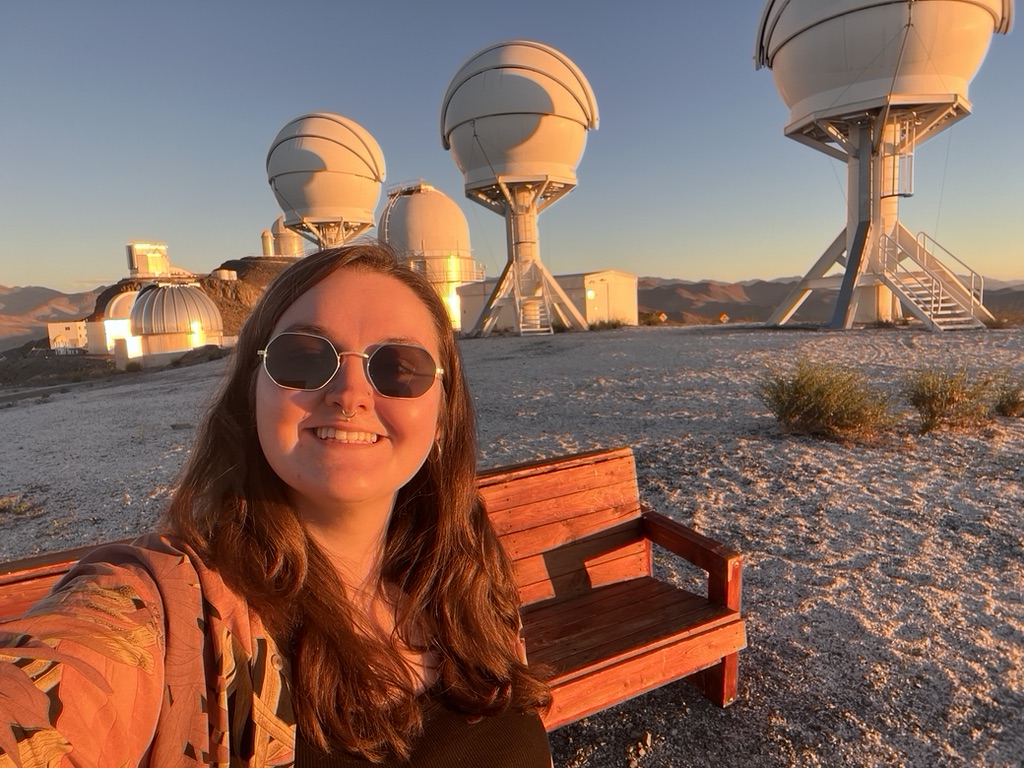
Alice at La Silla Observatory in Chile.
Surrounded by telescopes at La Silla Observatory in Chile during an observation run for ePESSTO+.
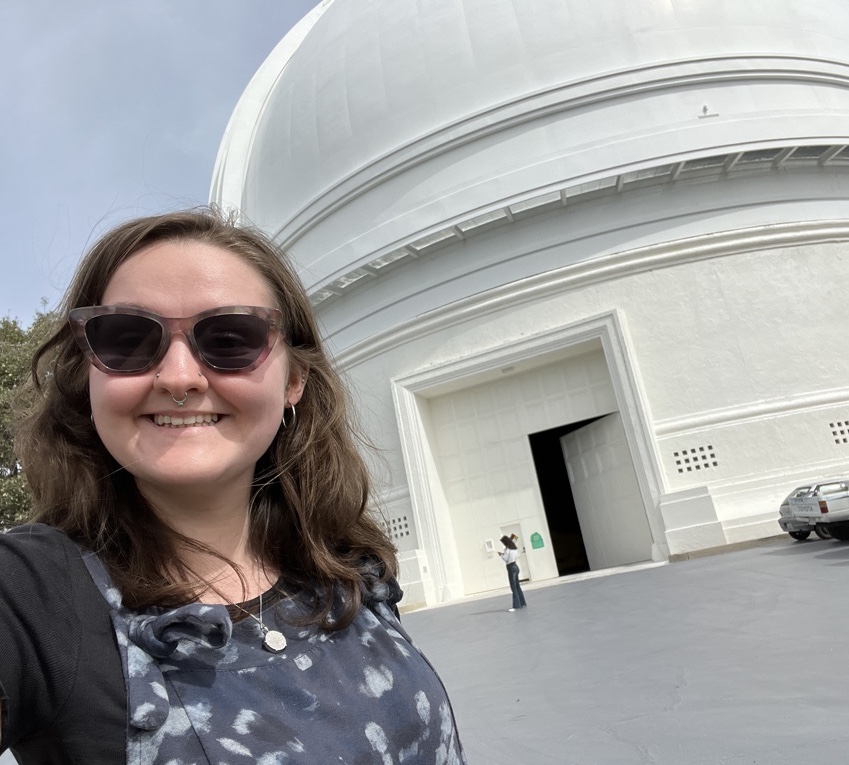
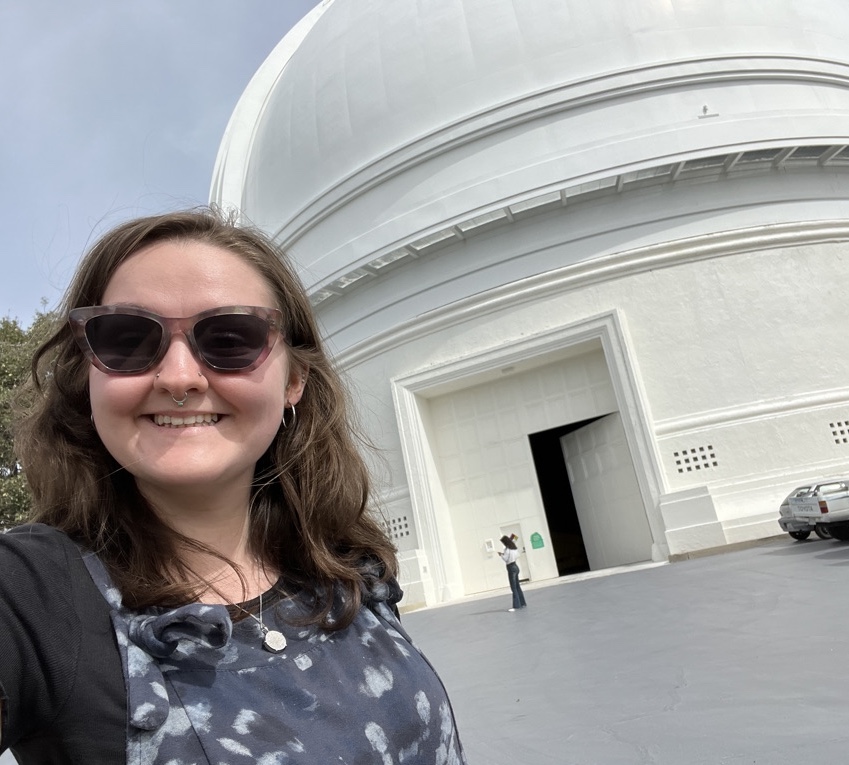
Alice at Palomar Observatory with the P200 telescope.
At Palomar Observatory with the P200 telescope.

I am Alice Townsend, a postdoctoral research fellow at the University of Birmingham. My research centres on explosive cosmic transients — in particular Type Ia supernovae (SNe Ia) — and how we can use them to better understand the Universe. I am especially interested in strongly gravitationally lensed supernovae and their potential as powerful tools for cosmology.

I completed my PhD at Humboldt University of Berlin, Germany, in February 2026. My doctoral research used data from the Zwicky Transient Facility (ZTF) to identify and characterise strongly lensed SNe Ia in archival data. I also developed a photometric classification framework for supernovae detected by ZTF.

Prior to my PhD, I obtained an MPhys in 'Physics with Astrophysics' from the University of Manchester in 2021, where my master's thesis focused on transitional millisecond pulsars.
Research interests

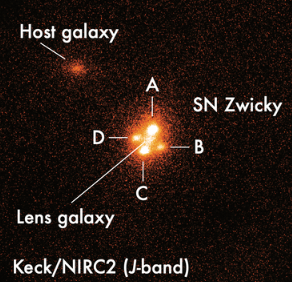
Credit: J. Johansson
SN Zwicky, an example of a lensed Type Ia supernova.

Strongly lensed supernovae

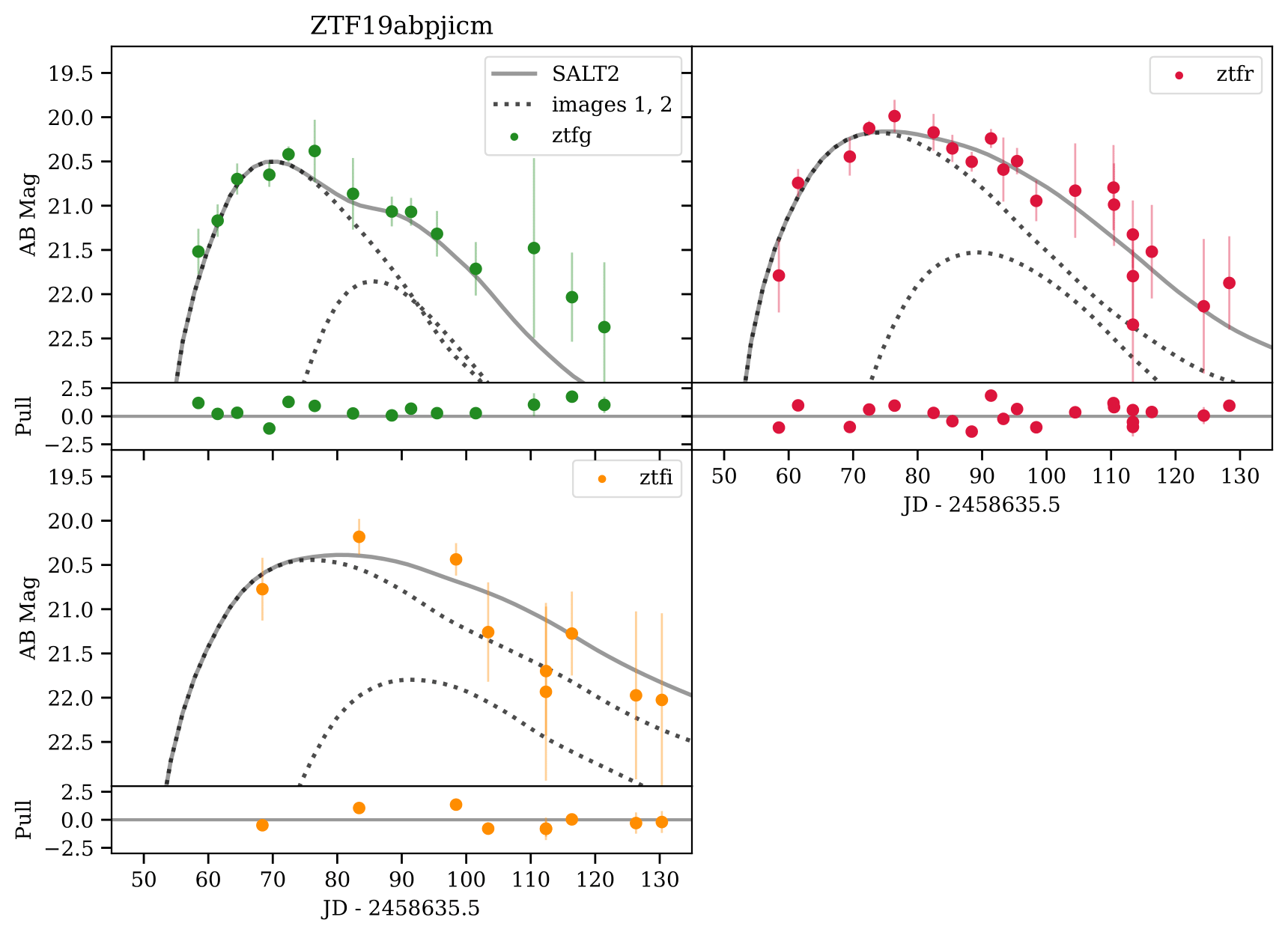
Strong gravitational lensing is a consequence of general relativity, where light from a bright background source is deflected and magnified by an intervening massive object. Strong lensed supernovae, in particlar Type Ia supernove, allow us to calculate cosmological parameters, distributions of dark matter, as well as the astrophysics of the supernovae and the intervening lensing galaxies themselves. My work involves searching for lensed supernovae in archival and live data from ground-based telescopes such as ZTF.

Credit: UT Austin
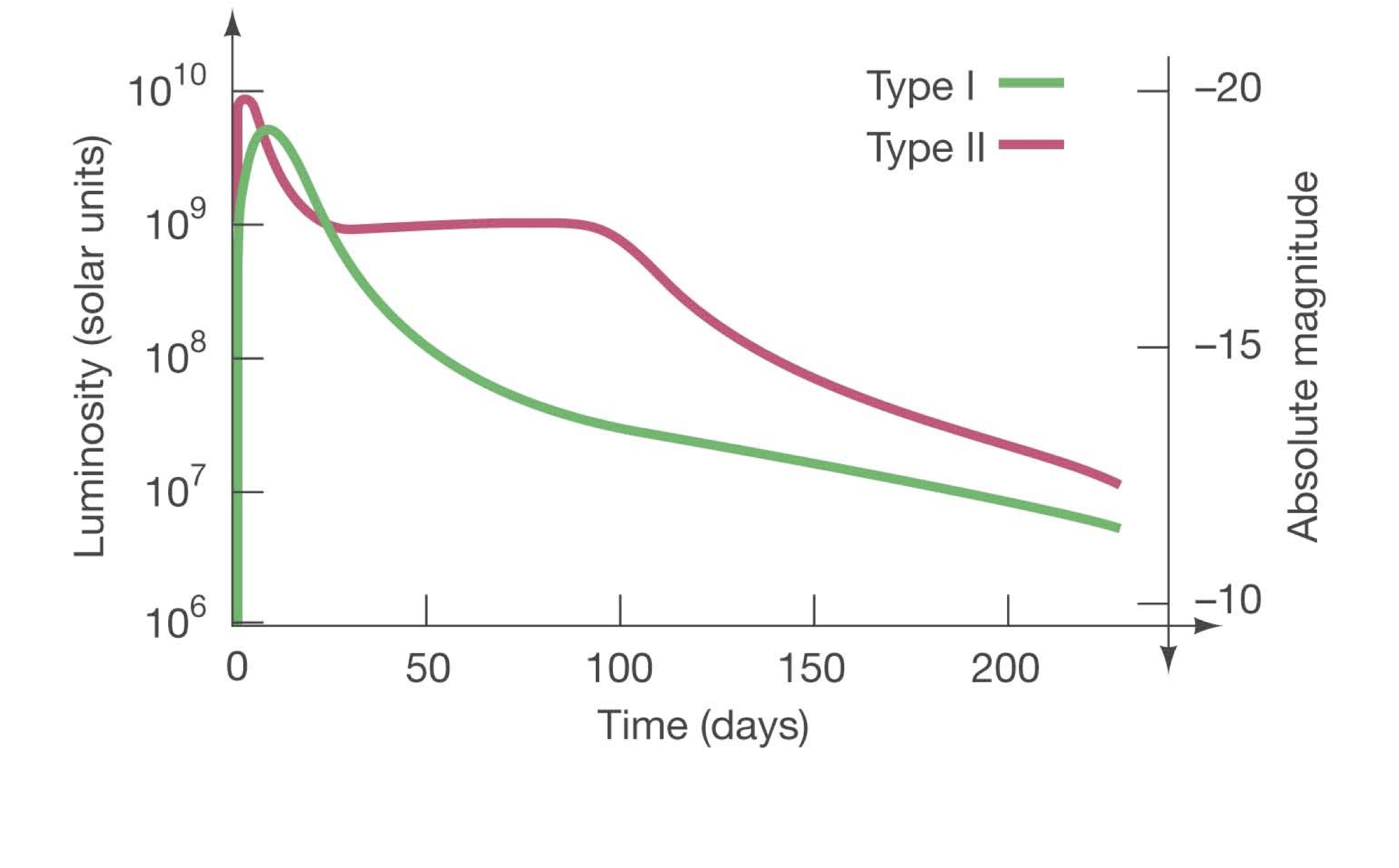
Comparison of Type I and Type II supernova light curves.

Photometric classification of supernoave with ML

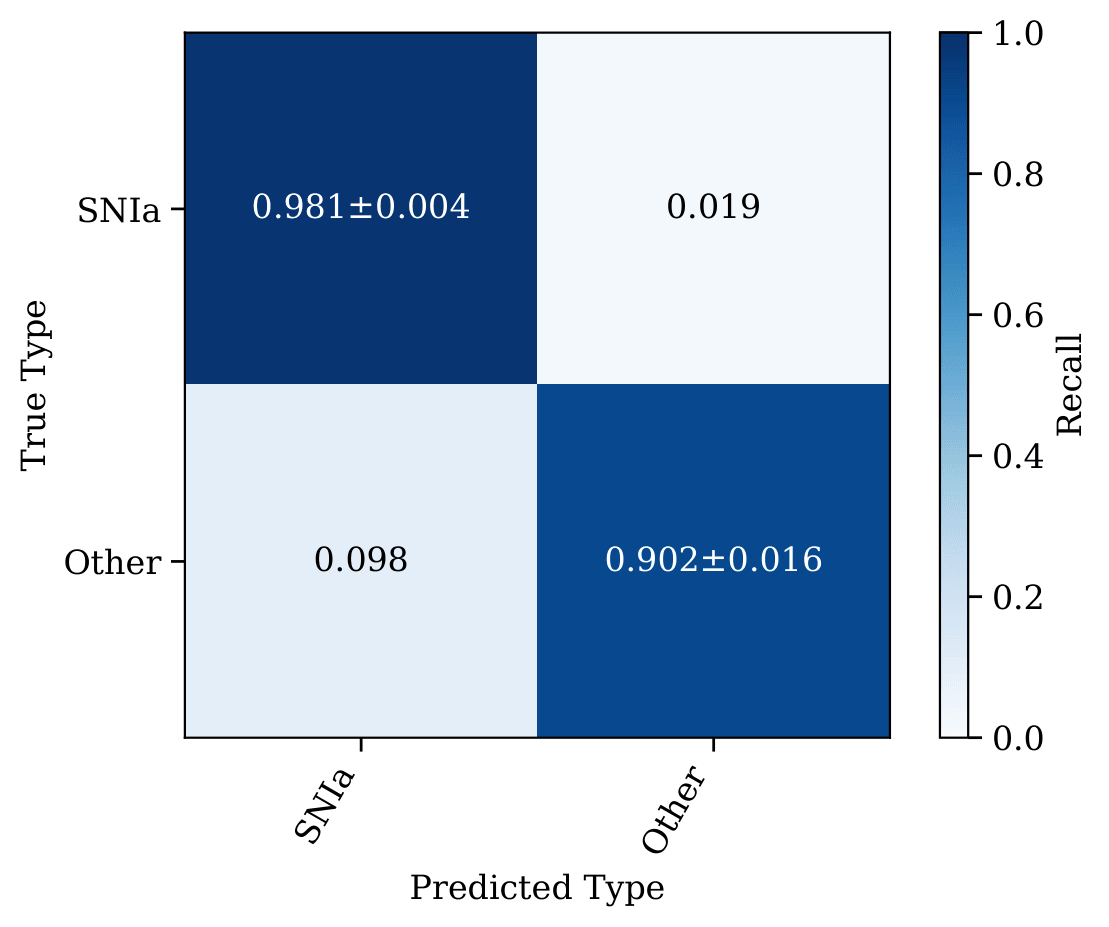
We are in an era of astronomy where we have an unprecedented amount of photometric data (i.e. light curves) of transients, but not enough spectroscopic resources to follow up and classify every object. In this case, photometric classification with machine learning is neccessary to type each supernova we detect. This is important for improving statistics in Type Ia cosmology, as well as for rate studies of each class. My research is applying photometric classification methods to live and archival ZTF extragalactic transients.

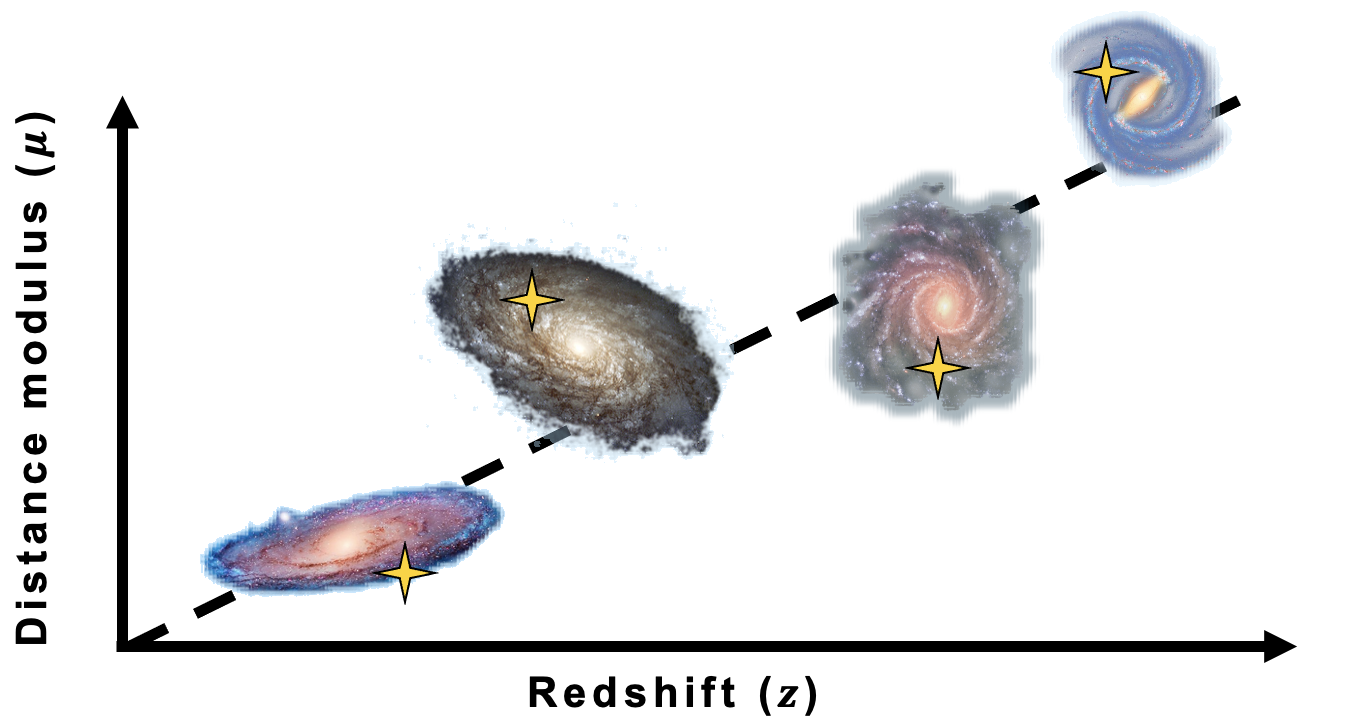
An example Hubble diagram, a plot of distance modulus vs. redshift.

SN Ia cosmology

Type Ia supernovae are bright, standardisable candles that play a key role in constructing the cosmological distance ladder. One exciting application of my photometric classification work is the upcoming ability to classify the entire ZTF extragalactic transient sample photometrically. This will yield over 50,000 Type Ia supernovae — an unprecedented dataset for cosmological studies. With it, we will be able to measure fundamental parameters such as the Hubble constant, the matter density of the Universe (ΩM), and the growth of structure in the early Universe (σ8).

Publications

First author publications:
Additional publications:
  1. Discovery of SN 2025wny: A Strongly Gravitationally Lensed Superluminous Supernova at z = 2.01
    (2025) J. Johansson at al.
  2. Detectability and Characterisation of Strongly Lensed Supernova Lightcurves in the Zwicky Transient Facility
    (2024) A. Sagués Carracedo at al.
  3. ZTF SN Ia DR2: Overview
    (2024) M. Rigault at al.
  4. Uncovering a population of gravitational lens galaxies with magnified standard candle SN Zwicky
    (2023) A. Goobar at al.

Additional publications I contributed to can be found on my ADS library, ORCID, or Google Scholar.

CV

You can view my CV here .

Contact

Feel free to contact me about my research or any questions you may have!

Email: alice.townsend@bham.ac.uk.